DR POOJA HARSHA MBBS, MS ENT, MRCS (ENGLAND) ENT, HEAD&NECK CONSULTANT, Fortis Hospital, Richmond Road, Bangalore | fashion and lifestyle September edition |
SINUS PROBLEMS AND THE STRUGGLE TO FOCUS
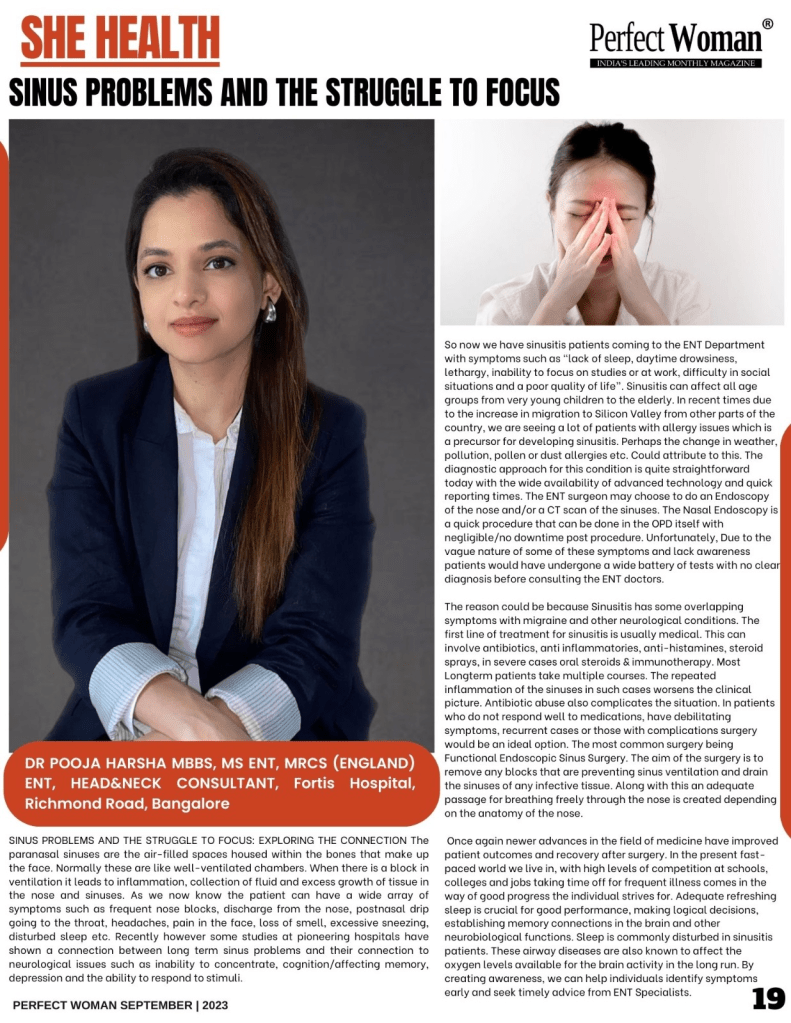
SINUS PROBLEMS AND THE STRUGGLE TO FOCUS: EXPLORING THE CONNECTION The paranasal sinuses are the air-filled spaces housed within the bones that make up the face. Normally these are like well-ventilated chambers. When there is a block in ventilation it leads to inflammation, collection of fluid and excess growth of tissue in the nose and sinuses. As we now know the patient can have a wide array of symptoms such as frequent nose blocks, discharge from the nose, postnasal drip going to the throat, headaches, pain in the face, loss of smell, excessive sneezing, disturbed sleep etc. Recently however some studies at pioneering hospitals have shown a connection between long term sinus problems and their connection to neurological issues such as inability to concentrate, cognition/affecting memory, depression and the ability to respond to stimuli.
So now we have sinusitis patients coming to the ENT Department with symptoms such as “lack of sleep, daytime drowsiness, lethargy, inability to focus on studies or at work, difficulty in social situations and a poor quality of life”. Sinusitis can affect all age groups from very young children to the elderly. In recent times due to the increase in migration to Silicon Valley from other parts of the country, we are seeing a lot of patients with allergy issues which is a precursor for developing sinusitis. Perhaps the change in weather, pollution, pollen or dust allergies etc. Could attribute to this. The diagnostic approach for this condition is quite straightforward today with the wide availability of advanced technology and quick reporting times. The ENT surgeon may choose to do an Endoscopy of the nose and/or a CT scan of the sinuses. The Nasal Endoscopy is a quick procedure that can be done in the OPD itself with negligible/no downtime post procedure. Unfortunately, Due to the vague nature of some of these symptoms and lack awareness patients would have undergone a wide battery of tests with no clear diagnosis before consulting the ENT doctors.
The reason could be because Sinusitis has some overlapping symptoms with migraine and other neurological conditions. The first line of treatment for sinusitis is usually medical. This can involve antibiotics, anti inflammatories, anti-histamines, steroid sprays, in severe cases oral steroids & immunotherapy. Most Longterm patients take multiple courses. The repeated inflammation of the sinuses in such cases worsens the clinical picture. Antibiotic abuse also complicates the situation. In patients who do not respond well to medications, have debilitating symptoms, recurrent cases or those with complications surgery would be an ideal option. The most common surgery being Functional Endoscopic Sinus Surgery. The aim of the surgery is to remove any blocks that are preventing sinus ventilation and drain the sinuses of any infective tissue. Along with this an adequate passage for breathing freely through the nose is created depending on the anatomy of the nose.
Once again newer advances in the field of medicine have improved patient outcomes and recovery after surgery. In the present fast-paced world we live in, with high levels of competition at schools, colleges and jobs taking time off for frequent illness comes in the way of good progress the individual strives for. Adequate refreshing sleep is crucial for good performance, making logical decisions, establishing memory connections in the brain and other neurobiological functions. Sleep is commonly disturbed in sinusitis patients. These airway diseases are also known to affect the oxygen levels available for the brain activity in the long run. By creating awareness, we can help individuals identify symptoms early and seek timely advice from ENT Specialists.
 Perfect Woman Magazine & Events
Leave a comment